
Follow Lee County Recent Arrests
The Lee County Sheriff’s Office Arrest Search is the controlling local source for Lee County recent arrests. Two controls drive it. Recent Bookings shows the current intake window. Recent Releases answers a different question. LCSO labels the database a courtesy, so entries reflect the facts known at the time of arrest or detention and may not be fully accurate.
Arresting people in the county is not one office's job. Cape Coral Police make arrests. Fort Myers Police make arrests. LCSO makes arrests too. Yet every person arrested lands at the same spot, because LCSO names the Downtown Jail as central intake for the whole county. Booking site, arrest location, and arresting agency sit in separate fields, which is why the county search comes first even for an arrest inside a city.
| Need | First source | Window or limit | What it establishes |
|---|---|---|---|
| Current bookings | Daily Arrest Report | Same-day-oriented query with pagination | A booking row was available, not exact arrest time or guilt |
| Releases | LCSO Recent Releases | Live query | A release entry, not the reason or case outcome |
| Several days | Weekly Arrest Log | Observed limit of about eight days | Results returned for the chosen dates |
| Court outcome | Lee Clerk inquiry | Depends on case and access rules | Public docket and disposition entries |
| Custody alerts | Florida VINE | One person, registered alerts | Reported custody changes, not a booking list |
Note: Arrest, transport, intake, data entry, and web publication occur at different points, so a fresh arrest may not appear at once.
Search Lee County Jail Arrests
The jail roster for Lee County is the same LCSO Arrest Search application. It renders in the browser. Records come from an official data service. The first pull shows only 20. More load by offset as you continue. Narrow filters cut name confusion and help separate people with similar names.
| Search field | Best use |
|---|---|
| First, middle, and last name | Start broad, then compare other identity fields |
| Date of birth | Separate similar names |
| Booking number | Target one agency booking |
| In-custody status | Limit results to current custody |
| Booking date range | Review a bounded intake period |
| Release date range | Locate an available release entry |
Start with the official search. Pick Recent Bookings or the search form. Enter the fewest reliable fields. Then expand a likely match. Check the booking number and date before opening charge details. Note whether the result says in custody or lists a release date. Housing can change. It does not equal a final sentence location. When many rows appear, load more results rather than treating the first 20 as complete.
The roster may show an image when LCSO returns one. Photos are not promised for every booking. Nor is there a fixed posting time or display period. Older arrests can drop off the live roster. Then contact Central Records or search the Clerk. A missing web result does not mean no record exists.
The official LCSO data endpoint helps explain why pagination matters.
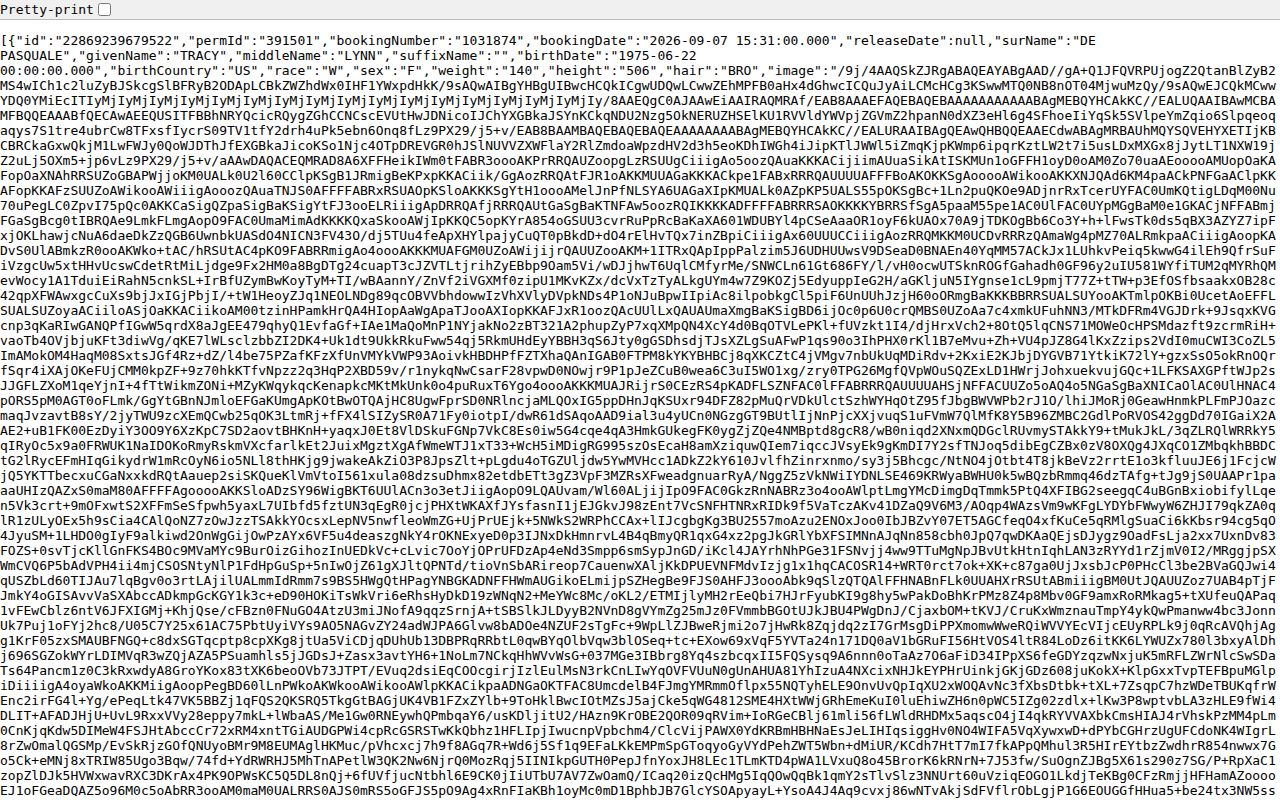
The source page shows structure, not a person gallery. It documents how live booking results are organized without turning them into photos of individuals.
Why City Arrests Become County Bookings
Lee County runs a central-intake model. Cape Coral and Fort Myers keep their own police departments. Bonita Springs does not, since LCSO polices it directly. Even so, people arrested by city officers all enter the LCSO corrections system. The LCSO Corrections Bureau names the Downtown Jail at 2115 Dr. Martin Luther King Jr. Boulevard in Fort Myers as central booking for every county arrest.
A police news release and a county booking row do different jobs. The release tells the story of a chosen investigation. The sheriff record logs booking and custody facts. A story can run before the roster finishes processing. Most routine arrests never earn a release. Check the agency named in the charge detail to keep the two straight.
Where Lee County Arrests Appear
Official sources should come first in any search. They name the record keeper. Corrections also move fastest through them. News and third-party archives can help pin down a date or agency, but they may omit updates, duplicate entries, or keep a stale copy after an official record changes.
| Channel | Photo | Status | Use |
|---|---|---|---|
| LCSO Arrest Search | May appear | Official | Current bookings, releases, custody fields, charge detail |
| Lee Clerk Court Records | Not the purpose | Official | Case events and final disposition |
| Florida DOC Search | May appear | Official state | State prison or supervision, not new county bookings |
| Cape Coral/Fort Myers news | Varies | Official but selective | Agency narratives, not a full roster |
| Local news outlets | Varies | Independent | Selected reported events; verify with agency and court |
| BustedNewspaper, RecentlyBooked, Mugshots Zone | Often | Unofficial | Secondary discovery only; records may be stale or incomplete |
Cape Coral Police keeps a selective narrative feed in its newsroom. The dated CCPD newsroom posts agency updates rather than a full booking list.

Dated posts add agency context. They do not cover every Cape Coral arrest that LCSO books into the county system.
Fort Myers Arrest Tools in Atlas One
Fort Myers Police calls Atlas One a free public-safety app for the city. Features include geo-fenced alerts, tips, and a public-records center. An Arrested Person Search and a Warrant Search sit inside it too. Nothing official says the app holds a second county booking database. Think of it as alerts plus service navigation. Confirm custody and booking facts with LCSO.
Florida VINE does a different job. It lets anyone check custody status and register for confidential phone, text, email, or app alerts. It is not a list of every new arrest. The VINELink Inmate Check page details Lee County participation, search steps, registration, and limits.
Lee County Recent Arrests by City
City names mark a location, not always the record custodian. The three city paths keep the local arresting agency separate from LCSO central booking.
- Cape Coral Recent Arrests covers Cape Coral Police narratives, city police records, and the county jail path.
- Fort Myers Recent Arrests covers Fort Myers Police, its legacy arrest-search link issue, Atlas One, and LCSO booking.
- Bonita Springs Recent Arrests explains why LCSO, not a municipal Bonita police roster, is the right source.
All roads lead back to the LCSO Arrest Search. Later court activity sits with the Lee Clerk, and each agency's records office keeps the reports its own officers wrote.
Read a Lee County Arrest Record
LCSO says its booking data reflect only what was known at the moment of arrest or detention. The record is a snapshot, not a full history. Charges load as a second-stage request. They may carry agency abbreviations, and the Lee Clerk tracks whatever the court later did with the case.
| Field | What it shows |
|---|---|
| Name and date of birth | Identity fields that still require corroboration |
| Booking number and date | Agency intake identifier and book-in date |
| Custody, release, housing | A time-bound status and location, subject to change |
| Physical descriptors | Administrative data that may be wrong or change |
| Charges and agency | Charges listed by the sheriff and the arresting agency |
| Bond, court, case, hearing | Available process fields, not a final result |
| Image | A conditional booking image, not evidence of guilt |
What is a disposition? It is the outcome a court records, such as a dismissal, plea, adjudication, or sentence. A release date alone cannot supply that answer.
Lee County Mugshots and Arrest Photos
The LCSO search may display a photograph when the official data returns one. Not every booking comes with an image. The display period is not fixed either. Juvenile, sealed, expunged, and other protected information can be withheld. No gallery is kept here. For a booking photo, use the official result or ask Central Records to treat the photograph as a separate item.
A person moved to state custody may appear under the Florida DOC Offender Search. That system holds state prison and supervision records. It is separate from the Lee County booking feed. The state page shows its search form, not a person.
The custody line is simple. County intake belongs to LCSO. State prison and supervision belong to Florida DOC. Unofficial photo sites should trail official sources, never lead them. RecentlyBooked says its Lee page covers the last 30 days and refreshes several times daily. Mugshots Zone keeps monthly archives; BustedNewspaper offers deep pagination. Such pages can hold stale details or miss official changes. Verify the booking with LCSO and the outcome with the Clerk.
Request Lee County Arrest Records
The official custodian route runs through LCSO Central Records. The office names Cherrie McAbee, Director of Central Records, as custodian, at 14750 Six Mile Cypress Parkway, Fort Myers, FL 33912. The phone number is 239-477-1350. Division hours run Monday through Friday, 7:00 a.m. to 5:00 p.m., with the lobby opening at 8:00 a.m. Weekends and most major holidays are closed.
Start with the durable LCSO Public Records Request Portal or contact the custodian directly. Details matter here. Give the booked name, date of birth if known, booking number, booking date, and arresting agency. List each item. That covers the booking record, the charge or intake document, and the booking photograph. State whether you want inspection or copies, plus a delivery method. For corrections, name the exact wrong field and supply support; a correction request is not a petition to seal or expunge.
The published paper-copy fee is $0.15 per page. No photo-specific fee, form, or turnaround is published. Statute 119.07 sets the pace. It requires access at reasonable times, prompt acknowledgment, and a good-faith response, with no blanket same-day deadline. Exempt material should carry its legal basis. A separate fee applies to an LCSO local background product, so keep it apart from a booking-photo request.
- Confirm the likely booking in LCSO Arrest Search.
- Record the booking number, date, and arresting agency.
- Ask separately for the booking record and photograph.
- Request a cost estimate if copies or staff work may add fees.
- Use the Lee Clerk for certified court outcomes.
Florida Law on Arrest Photos
Florida's Chapter 119 opens a wide door to records. It still allows exemptions and redactions. Juvenile confidentiality, victim protections, active investigations, sealed or expunged status, and court access controls can limit what appears. The Lee Clerk's online access also follows the Florida Supreme Court Access Security Matrix. Open booking data is not an open court file.
Section 901.43 targets the mugshot-for-money trade. It bars a business that publishes booking photographs from soliciting or accepting payment to remove them in the circumstances the statute defines. It also creates a written request route with remedies. Nothing in it orders a sheriff to erase lawfully held records. Official correction, a court order, a statutory exemption, third-party removal, and search-engine cleanup remain separate paths. Never pay on a suppression promise alone.
Fix the official source first. Go through LCSO or the Clerk. For legal relief, the Lee Clerk sealing and expunging page and FDLE walk through the Certificate of Eligibility and the court-petition sequence. Eligibility does not guarantee relief. RecentlyBooked waives fees for errors, wrong-person records, juvenile entries, dismissals, and sealed or expunged matters, with proof where needed. Mugshots Zone posts a free form for similar grounds. Its review can take up to 10 days. These are private policies, not promises, and once a source changes, Google's outdated-content process may clear a stale snippet.
Older Lee County Booking Records
Florida's GS2 schedule keeps old arrest records alive longer than people expect. Booking Records must survive one full anniversary year past release. So must Commitment and Release Lists. Inmate Incarceration Records carry the same minimum. Jail Docket Books are kept for good. These rules set retention floors. They are not web display promises, so LCSO can hold an old booking record without ever posting it online. For an older record, gather the agency, the date range, and the record series. Gather the name and any booking number. Ask LCSO Central Records first. Older court material that the online inquiry skips belongs to the Lee Clerk. State Archives staff can say whether a series was transferred there. Sealed, expunged, juvenile, and confidential limits still bind archived files.
Lee County Arrest Warrants and Fugitives
No public portal in Lee County guarantees a complete list of every active warrant. The LCSO Top Fugitives page is a curated wanted list. It is not an all-warrants database. Entries appear and vanish as the office updates the page. SWFL Crime Stoppers runs anonymous tip lines and reward channels, and its partner list can mix wanted people from several agencies. Always read the "Wanted By" field. The FDLE wanted-person search covers the whole state. FDLE says its data refresh from FCIC every 24 hours. FDLE also warns entries may be incomplete or stale. Verify each entry with the reporting agency. If you worry about your own warrant status, call the court or a lawyer and arrange a lawful resolution. Never approach or detain a listed person. Tips can stay anonymous. Call 911 for immediate danger, or the relevant agency for non-emergency information. A warrant can predate a booking, and a booking can happen without any new warrant, so these three sources can never merge into one Lee County arrest list.
After a Lee County Arrest
Once booking is done, the court file becomes the thread to follow. The Lee Clerk Court Records Inquiry searches by case number, citation, party name, attorney, or case type. Public categories include adult felony, misdemeanor, criminal traffic, and detention hearing. A wildcard helps with partial names. Some pre-2004 files need the Clerk's Records Request System. A few terms make the trail clearer. Booking is the jail intake record. Arraignment is the court stage where a plea may be entered. Bond covers release conditions or security. Disposition is the outcome, and expungement is court-ordered relief governed by law rather than a simple web deletion. One arrest row never tells the whole story. The Clerk later shows first appearance, filing, dismissal, plea, adjudication, or sentence, though confidential, juvenile, sealed, and purged material stays offline, so confirm any copy fee before ordering a certified record.
Custody Beyond Lee County Arrests
Custody systems answer narrow questions. Florida DOC Offender Search covers state prison and supervision. It may show an official image. It is not a live Lee County booking source, and it cannot replace the Clerk's case file. A county release can reflect bond, a court order, a transfer, or another path. It does not mean the charge went away. The Bureau of Prisons Inmate Locator holds federal inmates from 1982 forward. It is no county mugshot archive. ICE's Online Detainee Locator finds people currently in ICE custody or held by Customs and Border Protection beyond 48 hours. It cannot search anyone under 18. A-number and biographical searches are both offered. Federal arrest, ICE detention, local booking, and court disposition are distinct events, so use the agency responsible for the current custody state. Independent reporting adds context to a multi-agency arrest; the Cape Coral Breeze local-news section covers the region.
News stories can name the agencies behind a multi-agency arrest, but official custody and court records remain the real verification path.
Check Unofficial Lee Arrest Archives Carefully
BustedNewspaper's Lee County section digs deep, with heavy pagination and old booking dates, descriptors, and charge text. It is not LCSO. It is not the Lee Clerk either. A high post count proves nothing about completeness, and the material can sit stale for years. RecentlyBooked and Mugshots Zone differ in date spans and removal rules. Arrests.org pushes a private search product. That language maps poorly to Lee County's sheriff-and-clerk setup. Mugshots.com has no reliable Lee County page. Skip any guessed link. The BustedNewspaper Lee County archive shows the county-local structure plainly.
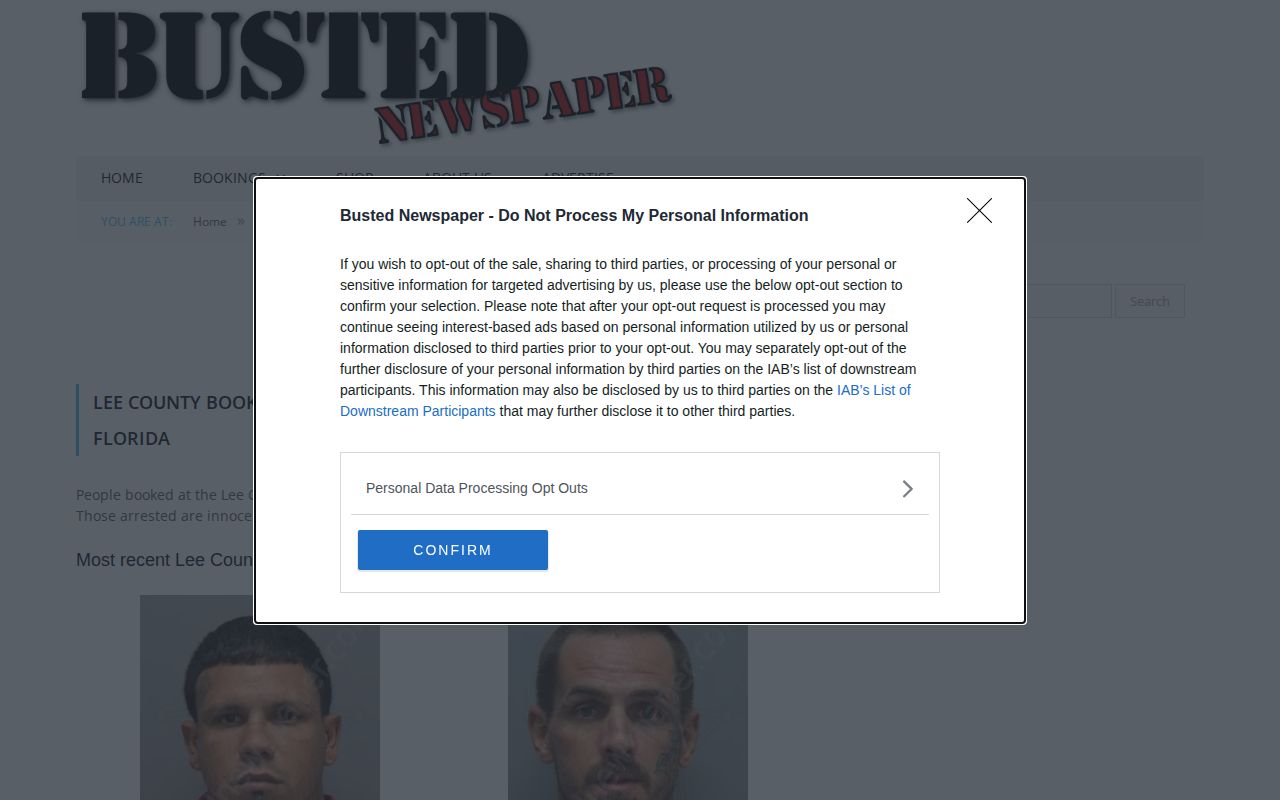
Treat any unofficial archive as a lead only. Verify the booking with LCSO. Verify the disposition with the Clerk. Domain names mislead people constantly in this corner of the web. A site can carry "Lee County sheriff" in its address and still be private. The verified LCSO domain is sheriffleefl.org. WFTX, WINK, NBC2, the News-Press, and Cape Coral Breeze offer selected journalism rather than full booking feeds, and a news photo may be a scene, file, or agency-supplied image.
Lee County Sheriff’s Office Location and Directions
Public Record Search
Sponsored Results